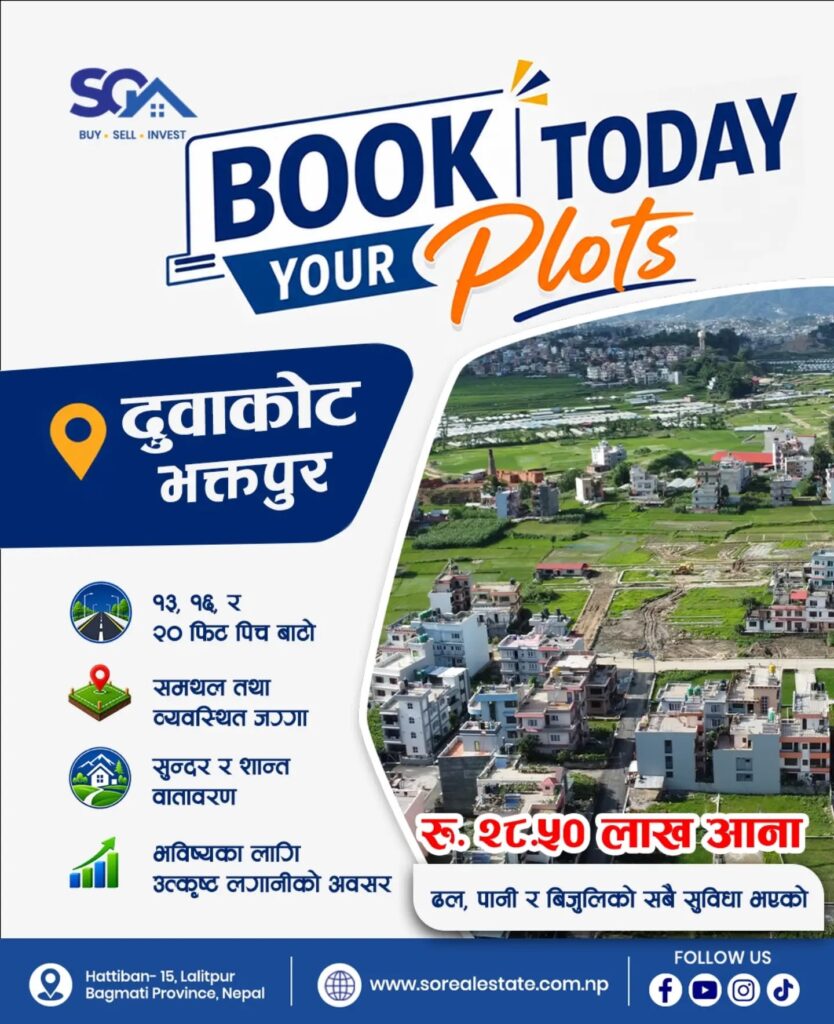
Historically, Nepal was a rural society with minimal towns, but previous highspeed development especially since the 1980s transformed land use, property ownerships, and property patterns. Urbanization has played a crucial role in shaping Nepal’s current real estate sector over the past few decades.
Real estate trends are rapidly changing due to urbanization, economic fluctuations, government policies, and the evolving preferences of people. some of the biggest real estate trends in 2025 that are reshaping the real estate market are:
-
Rapid urbanization and housing demand
- Expansion of cities like kathmandu, pokhara, bharatpur and butwal are expanding, increasing demand for residential and commercial properties
- Rural to urban migration is driving demand for affordable housing
- Space constraints in cities are pushing vertical growth, with luxury and mid range apartment which are gaining popularity in recent years.
-
Government policies and regulation
- Stricter enforcement of land use Zoning laws affects property development especially in Kathmandu valley.
- Even though in the past foreigners were banned from buying property in Nepal, in recent years Nepal has eased the rule for tourism linked real estate like hotels and resorts. But for a foreigner to invest he or she must partner with nepali citizen or company.
- Taxation and transparency in nepal’s real estate : increased taxes that apply to luxury homes, commercial properties, and multiple land holdings and on property transactions are there to boost revenue and discourage speculative buying.
-
Shift toward affordable and middle income housing
- Rising land prices in urban areas push developers to focus on smaller, budget- friendly units
- Banks and NBFIs offer competitive home loan rates boosting ,middle class home ownership
-
Growth of suburban and satellite cities
- Increasing preference to satellite towns like chandragiri, Bhaktapur outskirts and Dhulikhel which are emerging as alternative to kathmandu congestion
- Road expansion(outer ring road, fast track) enhances connectivity, increasing land value in peripheral areas.
-
Commercial real estate boom
- The commercial property sector is also expanding with increased investment in office spaces and retail outlets like shopping mall. The growth is accompanied by infrastructure projects like kathmandu-terai expressway, enhancing connectivity and business opportunities.
-
Technology and digital influence
- Platforms like hamrobazar, nepalhomes and sastodeal streamline property searches through online portals
- Post pandemic, digital transaction and virtual viewings are becoming the norm
-
Foreign investment and NRN interest
- Many non resident nepalese are investing in land and apartments as a long term assets
- Hotels, resorts and vacation homes in pokhara, chitwan, and mustang attract foreign and domestic investors
-
Sustainability and smart homes
- Eco-friendly designs and solar powered homes are gaining popularity as more people have become aware about sustainable development .
- Gated communities with security, amenities, and modern infrastructure make the, appealing to upper-middle-class buyers
Challenges in the market
- Unregulates pricing:
- Artificial price hikes due to land speculation, especially in urban areas due to unregulated pricing
- No strict government control leads to overvalued properties, making housing unaffordable for many
- Slow legal processes
- Administrative delays in land registration, ownership transfers, and permit approvals
- Complex paperwork and corruption in land offices slow down transaction
- Earthquake risk
- After the 2015 earthquake, buyers are cautious and demand earthquake resistant property
- Fear of poor construction quality affect market trust and investment
How urbanization influenced real estate in the past
Urbanization has significantly influenced the development of nepal’s real estate sector over the past few decades particularly since the 1980s which has brought major changes in land use, increased demand for property, and reshaped the overall dynamics of the real estate market.
Here’s how urbanization influenced real estate in the past:
-
Early urbanization
- Limited urban centers: kathmandu, Patan, and Bhaktapur were the main cities, with traditional newari style homes and agricultural land dominating
- Land as a status symbol: wealthy families and elite owned large plots, while most real land was used for farming.
- Government control: the land reform act|(1964) redistributed land but did little to regulate urban expansion.
-
Post 1990 liberation and urban boom
- Economic reforms: after nepal’s democratic movement in 1990, privatization and foreign investment increased, boosting urban migration.
- Kathmandu valley expansion: unplanned urbanization led to haphazard construction , converting farmland into residential areas
- Rise of land speculation: with increasing demand the land prices skyrocketed, especially in kathmandu, biratnagar, and pokhara.
-
Impact of civil war(1996-2006)
- Ruler to urban migration: the maoist insurgency forced many villagers to move to cities for safety, increasing housing demand
- Stagnant development: political instability slowed infrastructure projects, but informal settlements(slums) grew on the city outskirts
-
Reconstruction and real estate surge
- Peace agreement in 2006: stability led to a construction boom, with new housing colonies and commercial complexes
- Foreign employment and remittances: money sent by nepali workers abroad fueled real estate investments, particularly in kathmandu and pokhara.
- Unregulated growth: lack of zoning laws led to congested, poorly planned neighborhoods with inadequate infrastructure.
-
2015 earthquake and its aftermath
- Destruction and rebuilding : the earthquake damaged thousands of homes increasing in demand for earthquake resistant buildings.
- Shift to apartments: fear of future disaster pushed demand for modern, multi-story apartments over traditional homes.
- Rise of suburban areas: people began moving to safer outskirts( e.g. sankhu, kirtipur) due to Kathmandu congestion.
Key trends from part urbanization
- Land Over Housing: Investors preferred buying land over constructed properties due to higher appreciation.
- Informal Settlements: Rapid urbanization led to squatter communities (e.g., along Bagmati River).
- Commercial Growth: Markets like New Road (Kathmandu) and Putalisadak became prime real estate hubs.
Lessons from the past
- Unplanned urbanization caused traffic congestion, pollution, and poor living conditions.
- Land speculation made housing unaffordable for many locals.
- Lack of proper zoning led to mixed-use areas without proper infrastructure.
Comparison with the present trends
Then (Past):
- Informal, Unplanned Growth – Haphazard urbanization, illegal settlements, and weak zoning laws.
- Land-Centric Investments – Buyers prioritized raw land over buildings due to high speculation.
- Weak Regulation – Minimal oversight on construction quality and ownership transparency.
Now (Present):
- Planned Urban Expansion – Satellite cities (e.g., Nijgadh, Chandragiri) and infrastructure development are promoted by the Government.
- High-Rise Boom – Apartments and commercial complexes replace traditional houses due to limited space.
- Stricter Legal Oversight – Computerized land records (Nagarik App), building codes implemented, and anti-fraud measures.